NavyaAI logoNavyaAI
Agentic AI Development
Last reviewed

AI agents that know what to do — and when to stop.

We build production agents with evals, permissions, tool budgets, fallbacks, human approval gates, and cost-per-task telemetry from the first release. Wiring a model to tools is a weekend. Production is tool permissions, retry loops, evals, cost, escalation — the part the demo hides. We design those controls before autonomy. Daily written progress on every engagement; delivery for the US, Canada, UK, EU, and Australia.

14 days

First agent in production

A well-scoped single-workflow agent fits the fixed-price MVP sprint — deployed, evaluated, and instrumented, not a demo.

$0.47/M

Cost engineering underneath

Measured optimized serving from our published 70B benchmark — agent builds inherit the same cost telemetry, per task and per tool call. See the data

Every loop

Has a budget and a stop condition

Token budgets, tool-call limits, retry caps, and human approval gates are design inputs, not patches after the first runaway bill.

The agent demo is the easy 80%.

Anyone can wire a model to tools. Production fails in the parts around it: permissions, retry loops, stale context, missing evals, cost nobody measured, no escalation path. That production 20% is the actual job, and it is the part we specialize in.

Autonomy without limits becomes an invoice

Agent loops multiply model calls 3-10x per task. Without loop budgets, routing, and per-task cost telemetry, the first success metric an agent hits is your spend cap. Every NavyaAI agent ships with cost-per-completed-task visible from day one.

No evals means no way to say it works

An agent that changed yesterday cannot be trusted on last week's spot checks. We build golden sets, regression gates, and task-success metrics into the pipeline, so every change is measured before it reaches your users.

Deep Dive

Why most agents die between demo and production

In production, an agent meets real data, concurrent users, flaky tools, and adversarial inputs. Every one of those failure modes costs money — runaway loops, retries, frontier models on trivial steps — or trust: wrong actions with no human gate, silent failures with no escalation. The engineering that survives this is unglamorous: permissions, budgets, evals, observability, rollback.

Autonomy without control becomes risk. Intelligence without governance becomes liability. That principle is written on our homepage, and it is how we build: scope the smallest useful autonomy, gate the risky actions, measure task success, and expand autonomy only when the evals say the agent has earned it.

Agent economics: cost per completed task, not cost per token

Agents multiply model calls — planning steps, tool calls, retries, verification passes. Token price alone tells you nothing; what matters is what a completed task costs, and whether that cost is stable as volume grows. Our builds instrument exactly that, using the same measured-cost discipline as our published benchmarks: an optimized 70B stack at $0.47 per million tokens, with the raw data public.

This is also where routing pays. Most agent steps do not need the frontier model, and matching each step to the cheapest adequate model is the biggest single lever on agent cost — applied behind quality gates, so the evals decide what is adequate, not the price list.

Audit Focus

What we inspect before prescribing a platform change.

The first pass is designed to identify the smallest useful intervention: routing, caching, prompt control, serving tuning, or a deeper break-even audit.

Workflow selection: which processes actually justify autonomy — ranked by value, risk, and integration difficulty
Permissions and safety: least-privilege tool access, sensitive-action controls, human approval gates
Evaluation harness: golden sets, task-success metrics, regression gates on every change
Economics: token and tool-call budgets, model routing, cost per completed task
Reliability: fallbacks, retry caps, stop conditions, escalation paths, observability
Daily written progress: tasks, commits, blockers, and spend, reported to you every day
Demo-grade agent vs production agent — see the full map

The same workflow, two very different systems. The right column is what NavyaAI builds — and what the demo hides.

ControlDemo-grade agentNavyaAI production agent
Tool accessFull API keys, hope for the bestLeast-privilege permissions, sensitive actions gated
CostDiscovered on the invoiceLoop budgets + cost per completed task, live
QualitySpot checks in a notebookGolden sets, regression gates, task-success metrics
FailureSilent retry loopsRetry caps, fallbacks, human escalation paths
Change safetyPush and prayEvals run before every release
VisibilityAsk the developerDaily written progress: tasks, commits, blockers, spend

$47K → $28K

Case study: a Llama 3 70B production workload moved from 4 GPUs to 2 with INT8 quantization, KV-cache pruning, and serving changes — a 42% monthly cost cut with 2.3x throughput.

Read the full audit

Qualified Intake

Bring the workflow. Leave with an Agent Opportunity Map.

A 30-minute call maps your candidate workflows by value, autonomy risk, and integration difficulty — in writing, before any commitment. If an agent is the wrong tool for the job, we say so.

Get an Agent Opportunity Map

Founder experience — US roles & engagements at

Code and Theory (Stagwell Group)ProsciaWolframHeyNeoTeCSAR Lab · UNC Charlotte

Shipped Work

Output that shipped and scaled.

Products we've engineered and clients we've served — real platforms in production, not slideware.

BuildUNIX — product preview
Construction SaaS

BuildUNIX

Construction execution platform for PMC firms — phase-gated workflows, tamper-proof site records, and snag-to-handover tracking that replaces spreadsheets and WhatsApp threads.

Full-stack platform: Next.js, Postgres, async job pipeline, field-team mobile flows.

VectraGPT — product preview
Enterprise AI SaaS

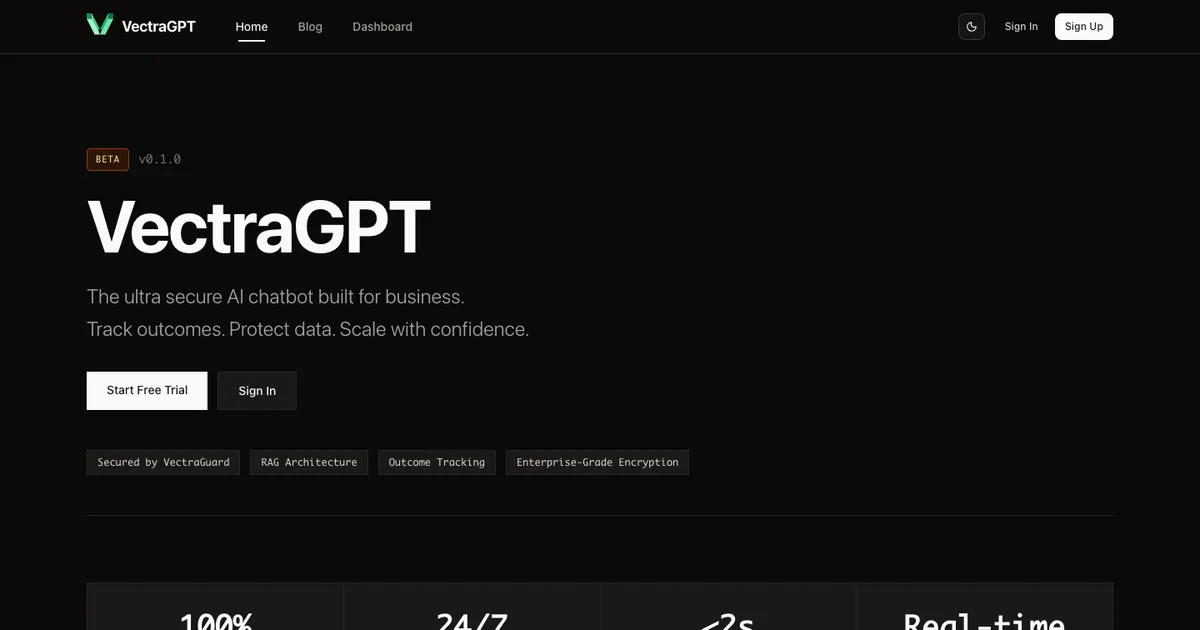
VectraGPT

Secure AI chatbots for HR, support, and sales — RAG-powered answers from company documents with audit trails, aligned to GDPR and SOC 2 expectations.

RAG platform end to end: ingestion, retrieval, guardrails, multi-tenant serving.

XeoRank — product preview
Developer SaaS

XeoRank

SEO, AEO & GEO intelligence engine for developers — triple scoring, Search Console integration, and CLI-first plus MCP agent workflows.

Agent-first product: MCP server, site crawler, scoring engines, WordPress control plane.

AdFargo — product preview
AI Creative SaaS

AdFargo

AI creative strategist — learns a brand from its URL and generates on-brand ads, video, and copy built to convert, in minutes.

Generative pipeline: brand ingestion to multi-format creative output.

Rankgent — product preview
SEO SaaS

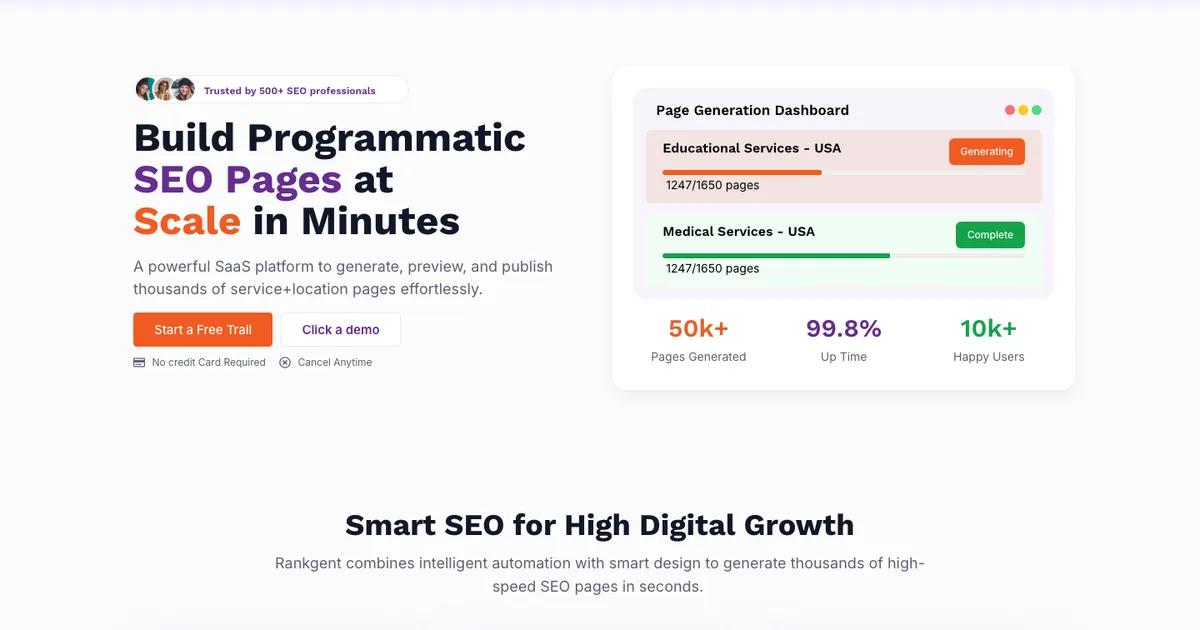
Rankgent

Programmatic SEO platform — generate, preview, and publish thousands of service + location pages in minutes. Trusted by 500+ SEO professionals.

Page-generation engine: templating, bulk preview, and publishing at 50K+ pages scale.

Also trusted by

Cheval
Core
Diro
Neo
PPC Roy
Scale Minds
WinWin
DMS
Digital Crats

FAQ

Common questions

What can an AI agent actually automate reliably?

Workflows with clear inputs, verifiable outputs, and bounded actions: document triage and extraction, support and operations workflows with defined escalation, research and enrichment pipelines, internal tooling that spans several systems. The Agent Opportunity Map ranks your candidate workflows by value, autonomy risk, and integration difficulty — and says honestly when a plain pipeline beats an agent.

How much does AI agent development cost?

A well-scoped single-workflow agent fits the fixed-price 14-day sprint — from $5,500 ≈ €4,800 / £4,100 / A$7,900. Multi-workflow and multi-agent systems run as phased builds from $24,000 ≈ €20,900 / £17,800 / A$34,300 or as an ongoing senior pod with transparent per-role pricing. Every agent ships with cost-per-task telemetry, so the running cost is visible from the first deploy — not discovered on the invoice.

How do you keep an agent from running away with cost or actions?

Budgets and stop conditions are design inputs: token budgets and tool-call limits per task, retry caps, model routing that matches each step to the cheapest adequate model, least-privilege tool permissions, and human approval gates on sensitive actions. The same discipline behind our published inference benchmarks applies to every agent loop.

How do I know the agent actually works — and keeps working?

Every build includes an evaluation harness: golden sets for the workflow, task-success metrics, and regression gates that run before every change ships. You see the eval results, and daily written progress reports cover what shipped, what's blocked, and spend against budget.

Do you handle compliance — EU AI Act, GDPR, data residency?

We scope it per engagement: role classification under the EU AI Act, human oversight design, logging and traceability, GDPR-aware contracts, and deployment in your cloud region or on-premise for data residency. Agents touching regulated workflows get human approval gates by default.

Who owns the agent, prompts, and evaluation data?

You do — completely. Code in your repositories, agents in your cloud, prompts and eval sets included in the handover, IP assignment standard in the contract. Nothing is locked to NavyaAI infrastructure.